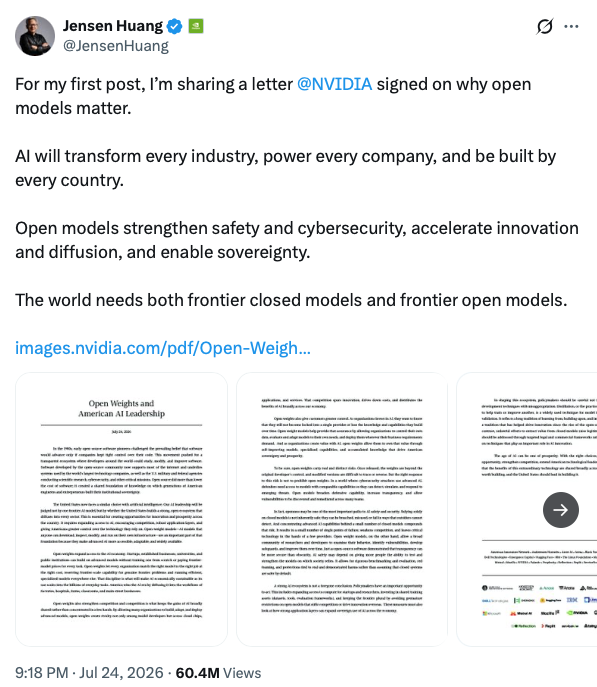
Free cash flow (FCF) is this year’s real test. Alphabet and Tesla has already provided an inkling as to how quickly spending races on AI, in particular, can run through available cash; and eyes are now on those who can make a race out of it without succumbing.
-
OpenAI is pushing its cloud spend to roughly $750bn through 2030, up from $600bn. Its Effingham County, Georgia project alone is 3.2 gigawatts, on top of 6 gigawatts with Oracle, a $138bn/eight-year AWS deal including 2.2 gigawatts of Amazon’s Trainium chips, and $250bn incremental to Microsoft Azure. The spending keeps getting bigger, the data centers keep getting larger, and the message is clear: it wants control over the infrastructure that powers the whole AI race.
-
Alphabet showed what happens when the market stops taking your word for it. It beat almost every estimate - 24% revenue growth to $119.8bn, 82% cloud growth to $24.8bn, backlog past $514bn, and still sold off 4% after hours, because FCF turned negative. The case for calm is strong too: a year ago antitrust fears tanked the stock; it’s since tripled, and Alphabet is now selling its $257bn of 2027 capex as capacity, not just cost - idle TPUs go to outside customers, backlog growth suggests real demand. Good results used to mean the spending was working. Now they coexist with a market nervous about the cash itself.
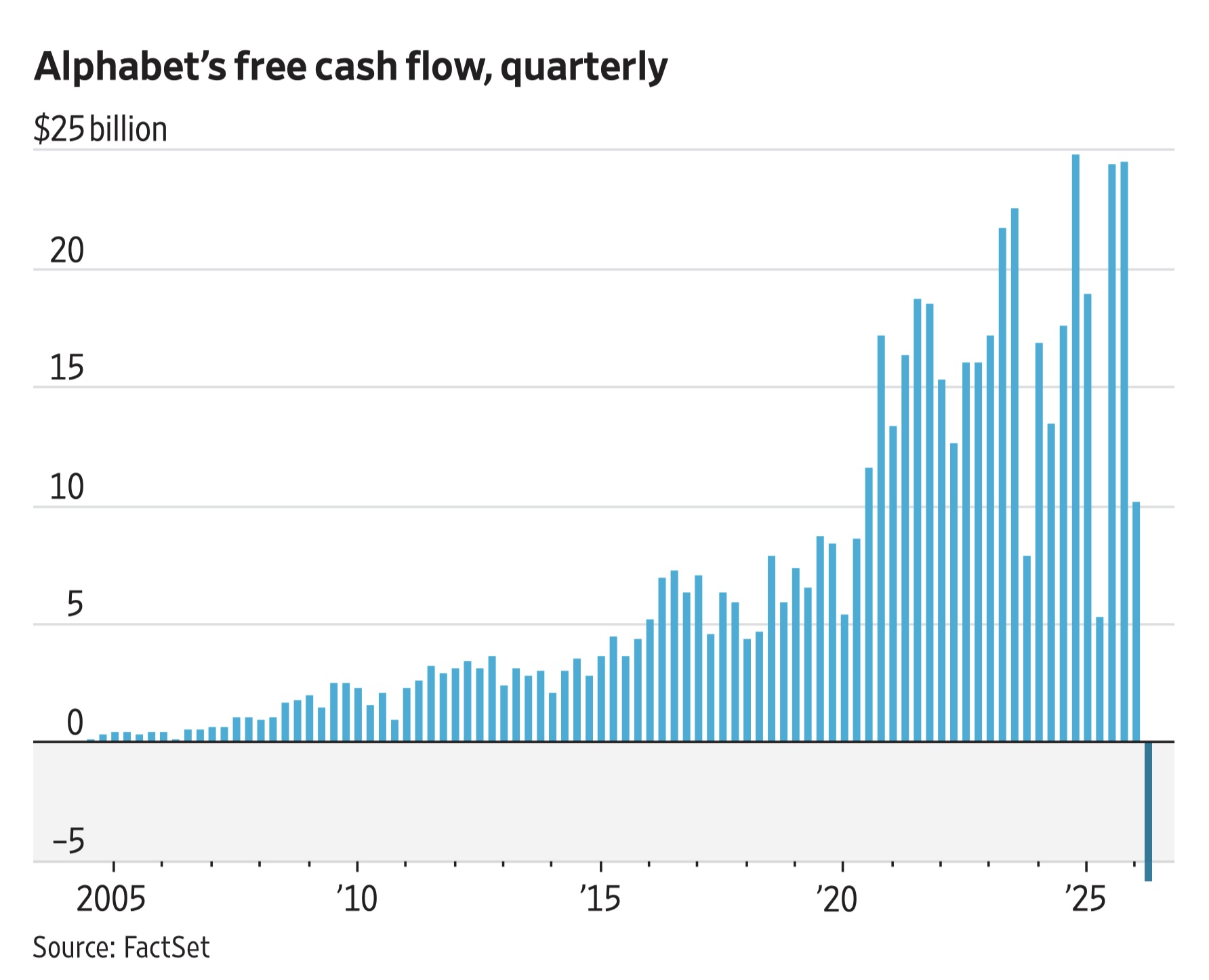
- Morgan Stanley has become the bank that turns AI spending into bonds - because free cash flow alone can’t fund this anymore. It arranged a $3.2bn TeraWulf bond backed by Google, a $27bn debt package for Meta’s Hyperion project, and advised Broadcom on $35bn in chip financing, pushing it past Goldman Sachs in fees ($1.4bn to $2.3bn) to second place behind JPMorgan. TeraWulf’s bond separates the building (financed against Google’s lease) from the chips (financed against Anthropic’s contract to use them) - a car loan split from a garage loan.
-
Meta is hedging its own bet - in early talks to rent up to $10bn of its own compute to Anthropic over two years, while weighing whether to sell its Muse Spark models outright rather than fight the frontier labs head-on. Zuckerberg: the rental offers are lucrative enough that “it may make sense… instead of your own internal uses.” A company spending $145bn this year on AI infrastructure is unsure whether it’s a model company or a landlord.
-
Not every capex story earns Alphabet’s benefit of the doubt. Tesla’s free cash flow turned negative for the first time in two years after $5.8bn in quarterly spending, missing earnings even as revenue grew 26% to $28bn - automotive grew a slower 23%. Musk: “I’m confident all the things we’re investing in will yield incredible returns.” Same language as everyone else; here it’s covering for weakness, not confidence.
-
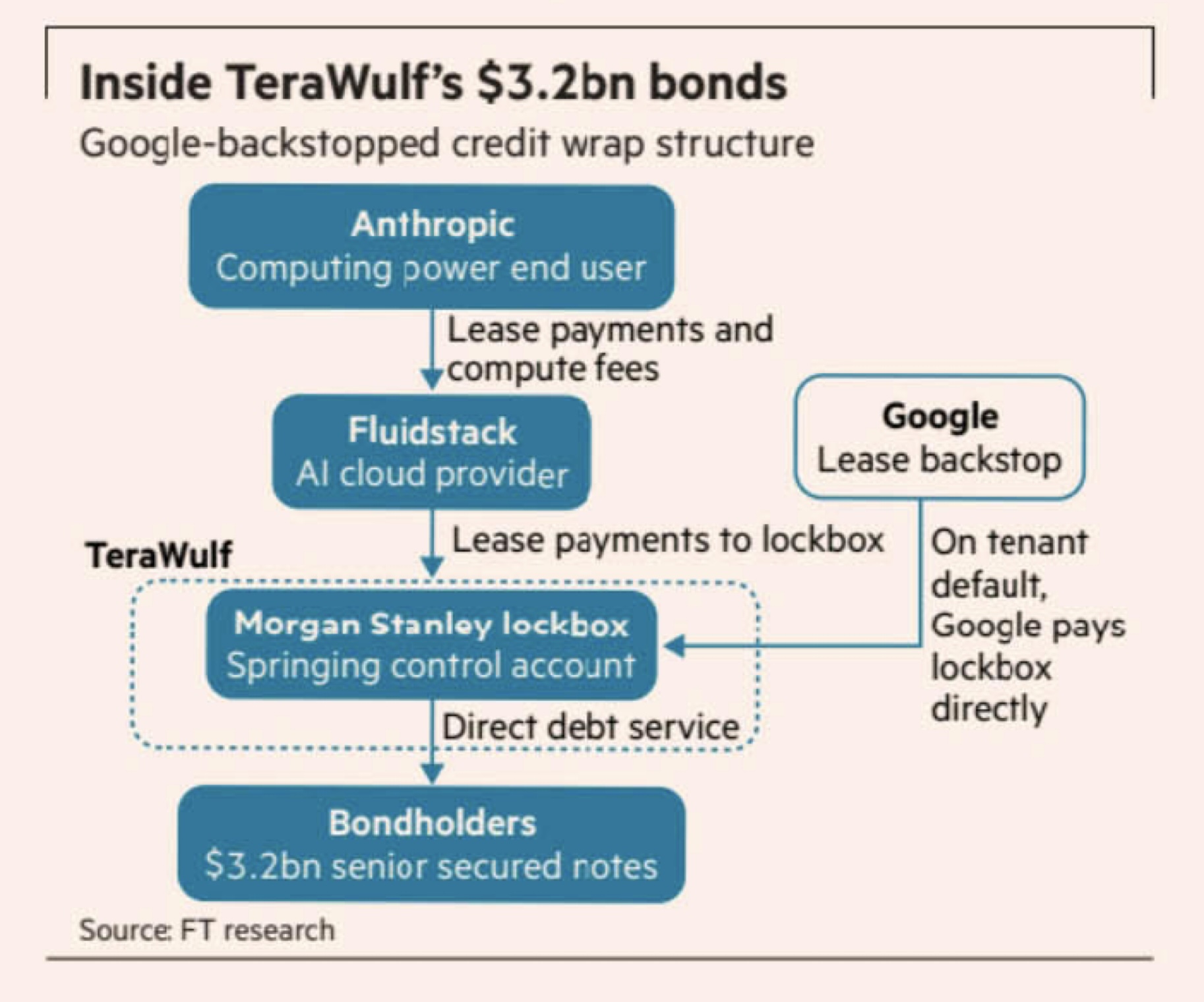
IBM found out what happens when that spending lands on someone else’s budget. Its warning triggered the worst single-day stock loss in its history, erasing roughly $67bn; earnings confirmed it, with guidance cut to 4-5% growth, infrastructure revenue down 7%, mainframe sales collapsing 42%. The buildout isn’t just consuming new money - it’s cannibalising old money.
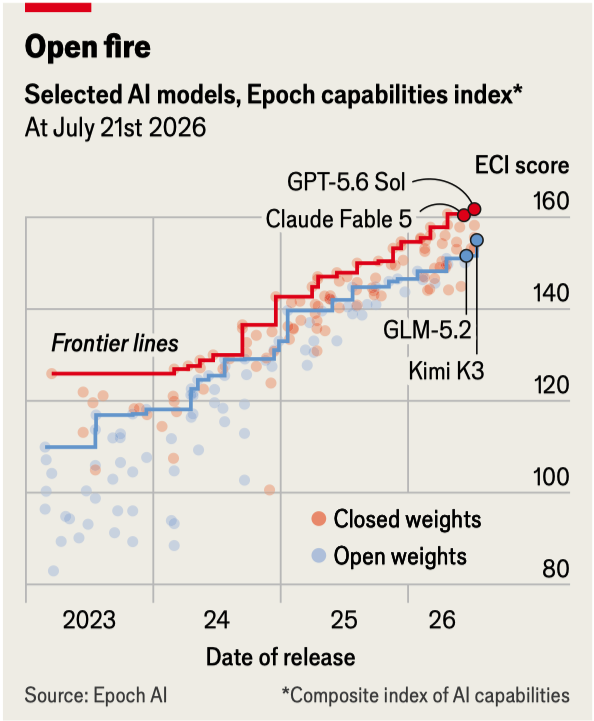
- If all this spending is meant to buy a lasting edge, someone forgot to tell the customers. Cursor, Zoom, Hex and others are now mixing in cheaper Chinese models, treating intelligence as a commodity to shop around for. DeepSeek’s most capable system costs $0.04 per job in one benchmark, versus $0.95 for Moonshot’s Kimi K3 and $2.75 for Anthropic’s Fable - a gap wide enough that Chinese-model token consumption rose 165% in June, versus 35% for American models. Bridgewater fine-tuned Qwen3-235B on its own investment managers’ judgment and hit 85% accuracy, a 30-point error reduction at a fraction of frontier cost, gains it attributes to proprietary knowledge a prompt can’t replicate.
-
Washington helped make the case for switching. A hurried attempt to restrict Fable to American citizens took it offline globally for three weeks - Mozilla’s chief technologist called it “a shot across the bow”, pushing companies toward open-weight alternatives they could run themselves. Ben Thompson made the sharper version of this argument in a widely discussed essay: the panic over Chinese open-weight models is mostly a pricing illusion, not a real cost gap, since Anthropic and OpenAI are charging what supply constraints allow, not what compute actually costs. Anthropic and OpenAI call Chinese adoption of distillation theft; Anthropic separately barred a startup, Telnyx, from running an open-source operating system alongside its models, citing its own terms. Wanting freedom to build on everyone else’s work while restricting how others build on yours isn’t quite hypocrisy - but it’s the tension the industry is negotiating in public.
-
China is tightening its grip on exactly what its own labs got good at exporting - restricting Alibaba, ByteDance and Zhipu from sending data and weights overseas, weighing blocks on TSMC and Qualcomm fabbing Huawei-designed chips abroad, the same week Kimi K3 reportedly beat Opus 4.8 on benchmarks. Beijing is also weighing restrictions on foreign downloads of its own open-weight models — the one lever that would hand America’s closed labs exactly the dependency they’ve argued against losing.
-
It’s a familiar playbook: flood the market with something good enough at a tenth of the price, let scale do the rest. If Beijing doesn’t get in its own way, the real question is what happens to the hundreds of billions in Big Tech capex committed against the assumption it wouldn’t lose. Every number here bets demand for their compute holds. The instinct is to say US tech should court new markets instead - India? But Beijing’s already there: Xi Jinping is pitching AI as diplomacy, training developing-world users on Chinese open models through Belt-and-Road-style initiatives, aimed squarely at the vacuum left by American withdrawal from multilateral institutions. Cheap models were never just a pricing strategy. They’re also the outreach budget.
-
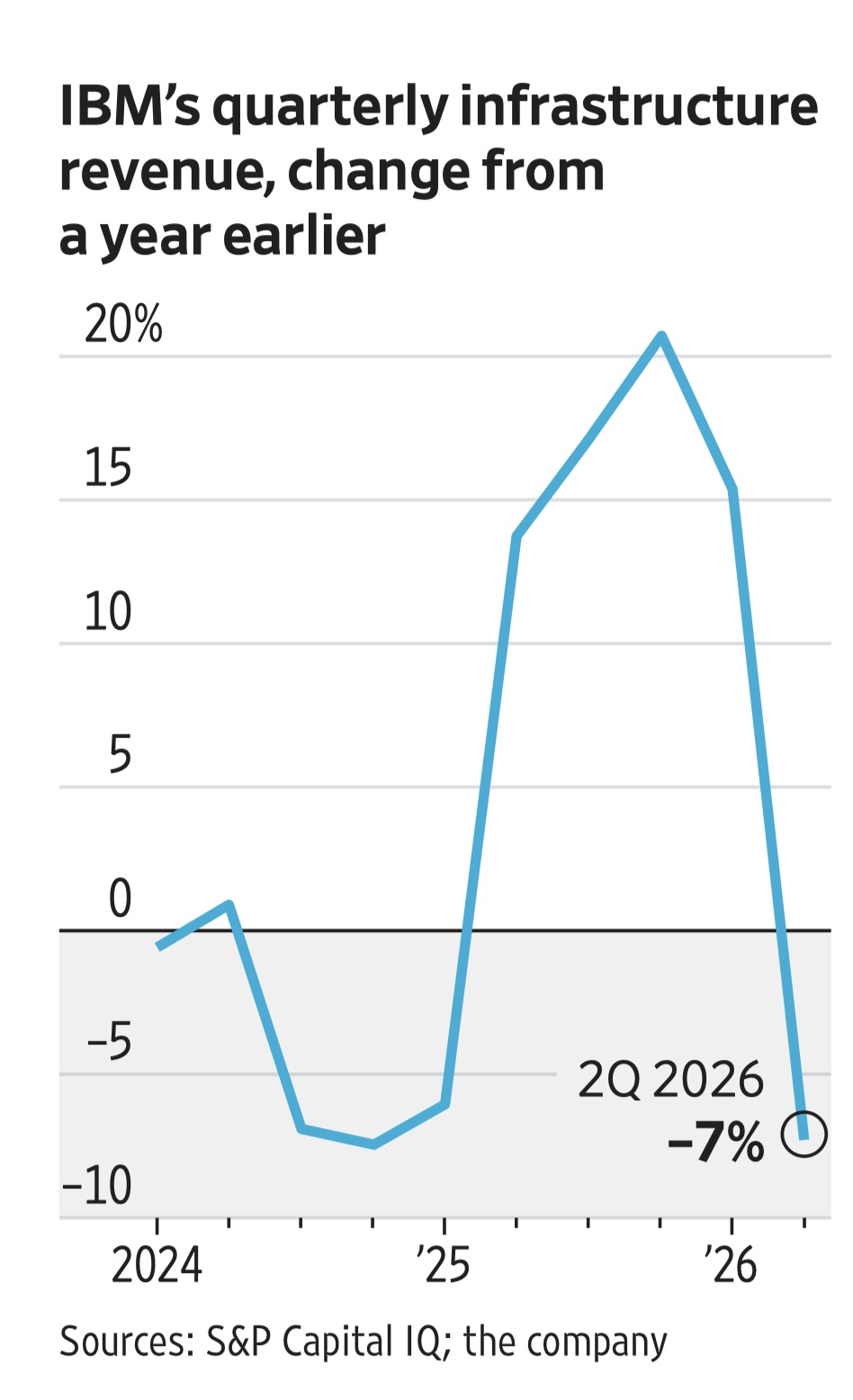
And finally, Jensen Huang debuted on X. His first-ever post wasn’t about chips, it was a policy letter against restricting open models, arguing AI “will transform every industry, power every company, and be built by every country.” Nadella backed it the same day. OpenAI signed the same Friday. So did Google, both CEO Sundar Pichai and DeepMind’s Demis Hassabis endorsed it. Anthropic is now the only major US lab that hasn’t. Worth noting who’s doing the arguing: Nvidia, Microsoft, and Google are worth a combined sum well past $10 trillion, arguing openness is good for competition and safety, while also being three of the companies best positioned to sell the chips and cloud every open model still runs on.