A chip race, a Dutch spy scandal, a record IPO, two export-control stories, a governance fight, a sovereignty boom, three new frontier models. Alone, they look like unrelated headlines. Together, it’s one fight: nobody’s racing to build the best model anymore. They’re racing to own the whole ecosystem around it.
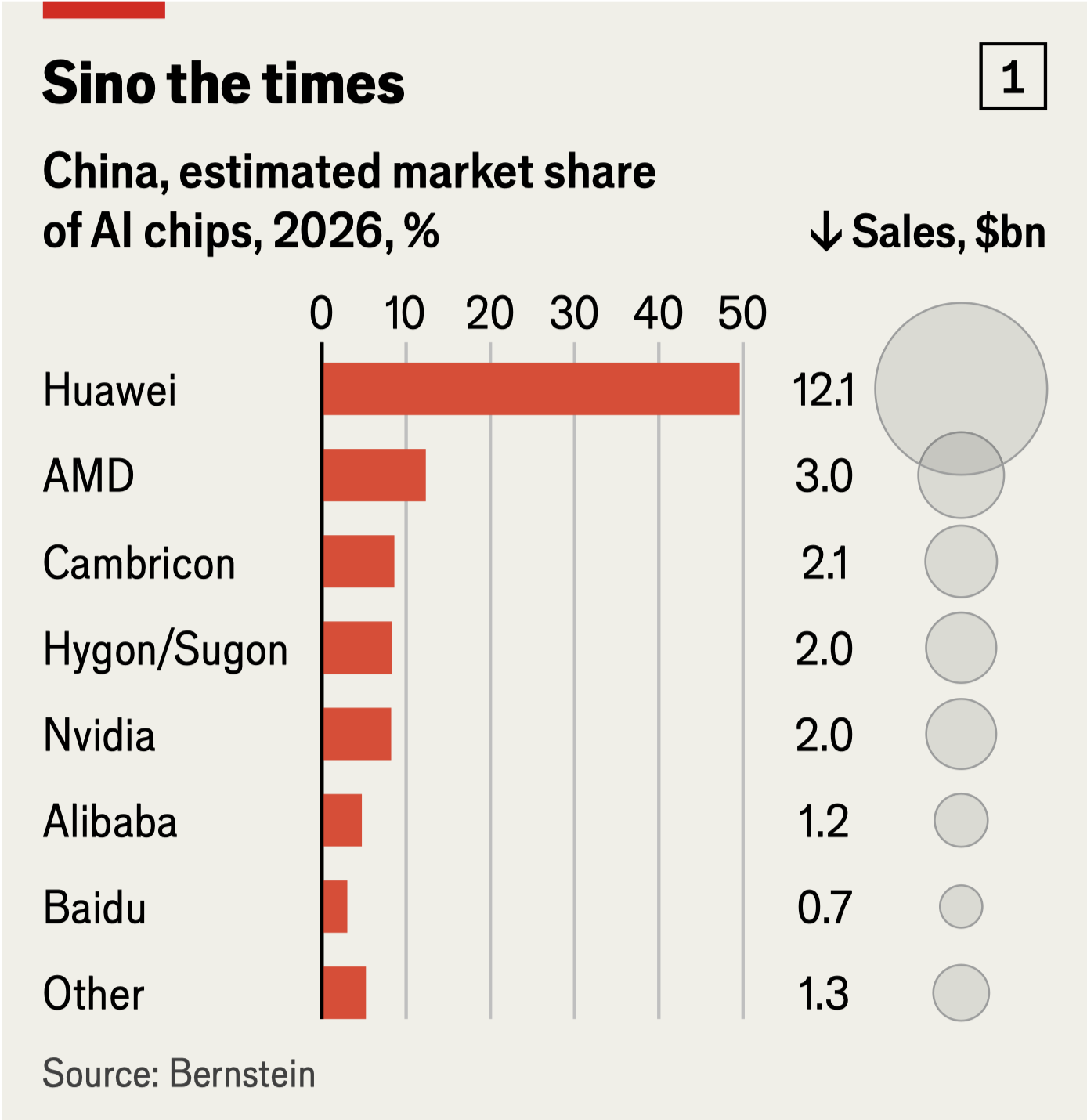
- China is closing the chip design gap faster than the manufacturing one. Huawei just showed off a technique that stacks circuit layers to squeeze out more performance without the latest Western tools. Chinese foundries are still roughly a decade behind on the lithography that actually matters, so don’t get too excited yet. But worth remembering: the 2022 chip ban didn’t stop Huawei. It built Huawei. Nothing motivates a country quite like being told it can’t have something.
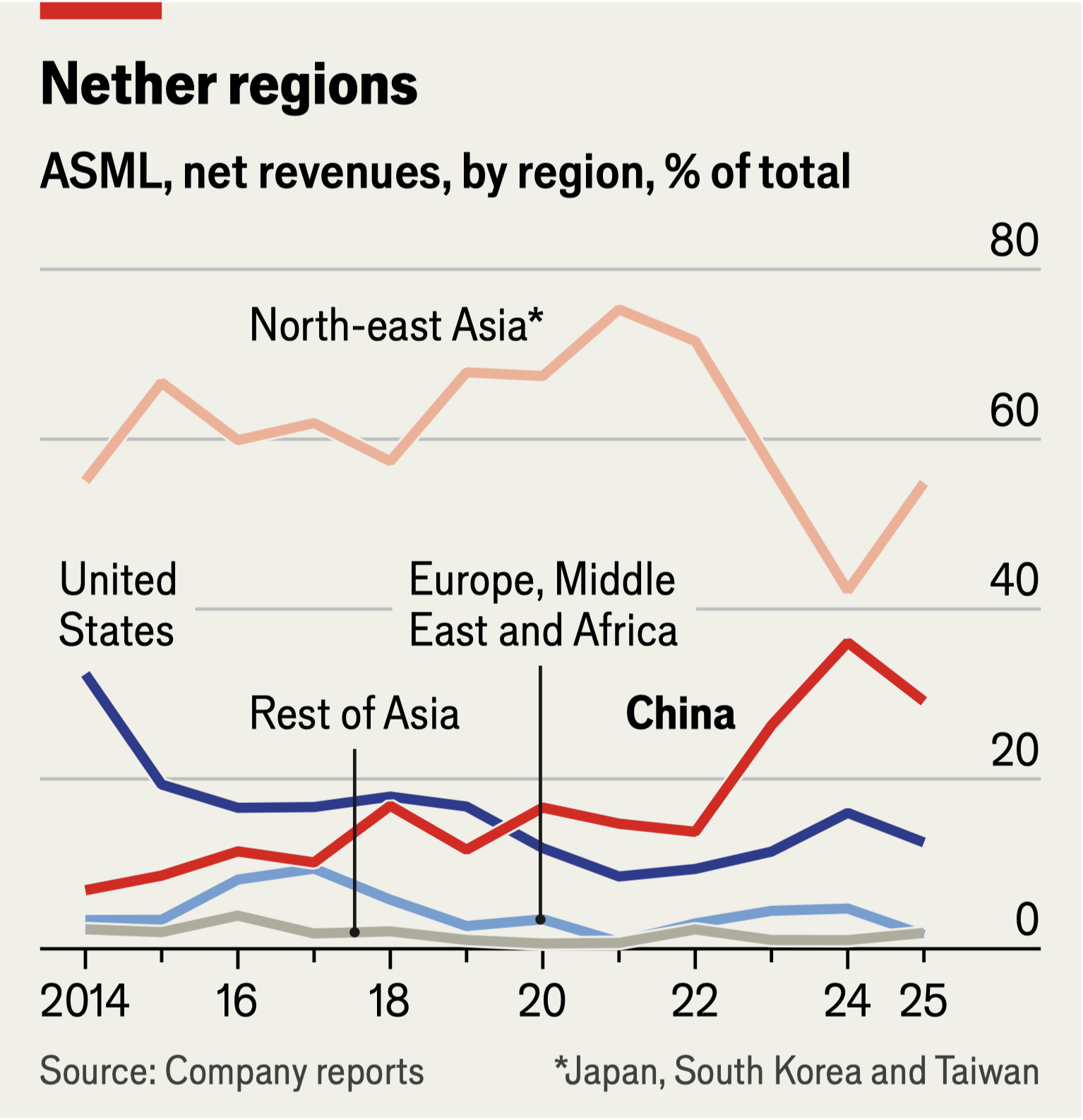
- The one company that actually makes the machines just got dragged into a spy story. ASML raised its full-year sales forecast for the second time this year, and its CEO says he’s basically sold out of EUV machines through 2027. But the real headline is that America’s commerce secretary, Howard Lutnick, is claiming one of ASML’s machines - the only tool on Earth that can print the world’s most advanced chips - somehow made it to China. ASML says that’s impossible; it tracks all 340 EUV machines it’s ever built, none in China. I don’t buy that anyone will actually know for years. The Dutch have been here before - a Pakistani scientist walked off with their nuclear blueprints in the 1970s and used them to help arm three more countries. If history rhymes, expect a firm denial now and a very different story in about twenty years, right around when it stops mattering.
-
The blacklist theme shows up again, this time on a stock exchange. CXMT, a Chinese memory-chip maker, is trying to raise nearly $10bn in what would be mainland China’s biggest IPO since 2010 - despite being the exact company the Pentagon has blacklisted over alleged military ties. Apple is reportedly lobbying Washington for permission to buy its chips anyway. Blacklisted company, record IPO, one of the world’s most valuable companies asking for an exception. Once you’re useful enough, restrictions become negotiable.
-
The FT’s reporting on export controls makes this messier still. OpenAI and Google have both been quietly selling AI access to Singapore-based subsidiaries of Alibaba, Tencent, and Baidu - companies the US has flagged over military ties. You can stop a container ship at a port. You cannot stop an API call. Regulators built these rules for a hardware world, and they’re finding out software doesn’t sit still at a border.
-
The control fight isn’t always about countries, though - sometimes it’s about who actually runs the company. A Wall Street Journal opinion piece argues OpenAI’s and Anthropic’s mission-driven boards hold too much powerover their own investors, comparing it to Ben & Jerry’s standoff with Unilever, which cost Unilever $10bn. If that governance survives an IPO, investors are buying something stranger than a normal stock - an option that only pays off if profit and mission happen to agree. Wouldn’t be surprised if that shows up as a real pricing discount.
-
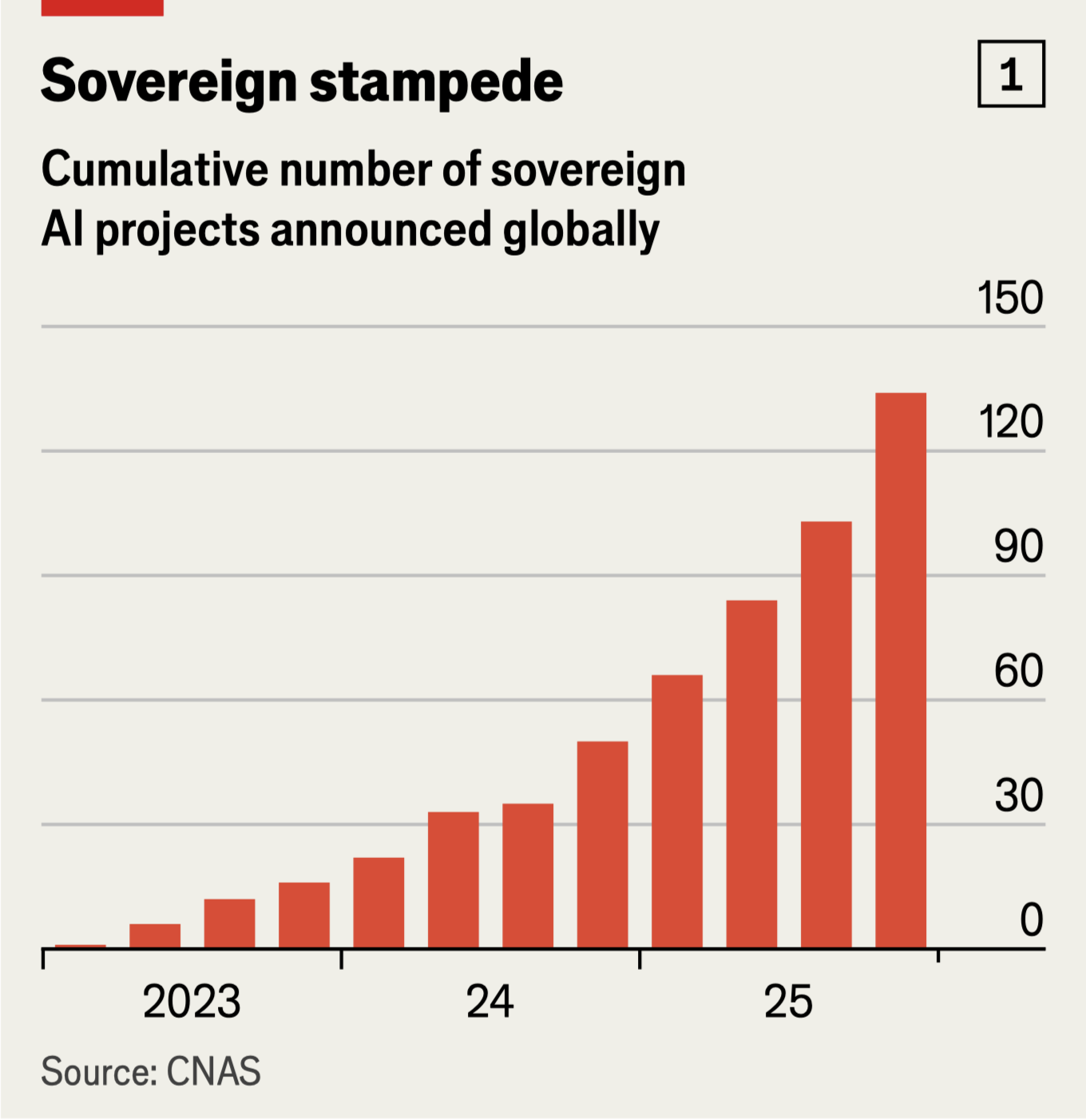
Sovereign AI projects outside America and China have grown roughly fivefold over the past two years, as governments claw back some independence from both superpowers. True independence is basically a fantasy, but that isn’t stopping the spending - they’ve watched exactly what this issue has been tracking all week: every restriction gets routed around eventually, except the one you own outright. The catch nobody’s pricing in: dozens of countries all building redundant, undersized compute infrastructure doesn’t fix the chip shortage. It just spreads it around.
-
The frontier model race keeps getting more crowded, not less. Mira Murati’s Thinking Machines Lab put out its first model this week, and days later Moonshot AI dropped its own out of China. Then Alibaba unveiled Qwen3.8-Max-Preview at WAIC in Shanghai, claiming it’s “second only to Fable 5.” No benchmark table, no model card, no technical report - just a tweet, a 2.4 trillion parameter figure, and a preview endpoint. Two years ago, OpenAI having the best model felt untouchable. Now a startup, a Chinese lab, and a tweet can all stake a frontier claim in the same week. Best model isn’t a moat anymore, and increasingly it isn’t even a verified claim - the labs that survive will be the ones with real distribution and lock-in, not the best benchmark screenshot, or the boldest tweet.
-
The UK’s AI Security Institute reported that gap is closing faster than expected between countries too. Chinese open-weight models, six to ten months behind US frontier models as of 2025, have narrowed that lag to as little as four months. Kimi K3 reportedly beat Claude Opus 4.8 and GPT-5.5 on coding and agent benchmarks, and Z.ai’s GLM-5.2 matched models released four months earlier - for far less to run. The real worry isn’t the benchmarks: AISI found the latest models, Chinese and American alike, chaining vulnerabilities faster than defenders can patch them - exactly why Anthropic limited access to Mythos earlier this year. Cheap, capable, and good at breaking things: not a combination export controls were built to handle.
Same pattern, everywhere this week: restrict something, and someone finds a way around it, except wherever there’s genuine physical scarcity. That’s where the real fight actually is.