No product, billions raised. No credit rating, billions guaranteed. No leverage limit, one fund nearly wiped out. The AI boom isn’t running on cash flow. It’s running on credit borrowed from somewhere else.
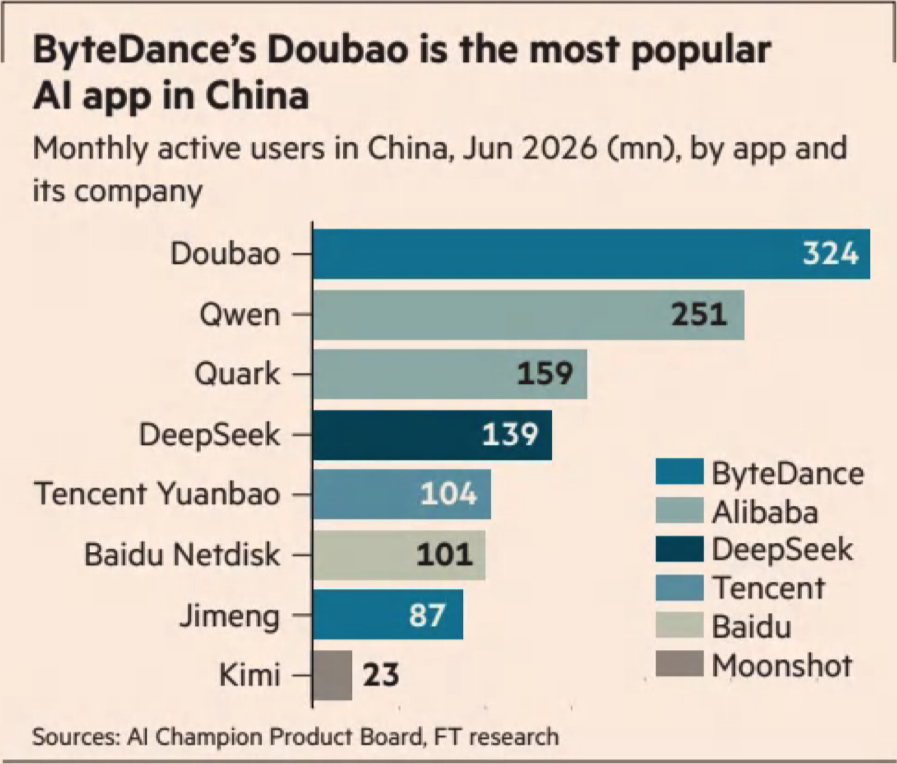
- ByteDance is trying to build the entire AI stack itself. Doubao leads China at 324mn monthly users as Zhang Yiming pushes across models, video (Seedance), cloud (Volcano Engine) and chips, an ambition to control every layer of the AI supply chain at once. It is spending nearly everything it earns on AI, but cracks are starting to show. Many researchers are leaving for Tencent and startups, and Volcano Engine’s price cuts haven’t won large enterprise clients - despite ByteDance’s edge in scarce, TikTok-sourced video data. The gap at ByteDance seems very familiar; the instincts built for winning consumers on price and speed haven’t yet translated into winning enterprise contracts.
-
And that ByteDance’s capex just landed in Brazil. It is building its largest data center outside China in Ceará - a $38bn project starting at 200 megawatts, scaling to 1 gigawatt by late 2027. Brazil’s government calls it a step toward “digital sovereignty”. But for the indigenous Anacé community nearby, displaced decades ago when an earlier refinery project fell through, the view is different: a facility that will draw as much power as a midsize city, while they deal with regular blackouts. This is the second time the Anacé community has had their land cleared in the name of economic promise that ultimately benefits people far away, not them.
-
Two deals show chip and cloud giants taking direct stakes in labs they depend on. Nvidia invested $5bn in Ilya Sutskever’s Safe Superintelligence (SSI), lifting its compute tenfold in 12 months - notable given SSI has no shipped product or published research. It’s one of several such bets alongside OpenAI and Thinking Machines Lab. Google is guaranteeing \$15bn of Anthropic’s data-center debt across four Texas leases, for a stated ~20% equity stake; Anthropic is shifting toward direct tenancy, targeting 10+ gigawatts.
-
Nvidia is also running the purer “credit wrapper” play, guaranteeing debt outright. It signed a $50bn Texas lease with Hut 8, securing guaranteed grid power on a nearly 1-gigawatt site; the guarantee let Hut 8 price bonds just ~100bps over Nvidia’s own debt, and Nvidia can sub-lease capacity to resellers - customer, landlord and financier at once. The bigger story: Nvidia is arranging a $250bn backstop for OpenAI’s 10-gigawatt Ohio campus, separate from a possible $350bn deal to finance OpenAI’s chip purchases. China has its own version of this - minus the guarantees. Rather than backstop a company’s debt, the state simply owns it outright.
-
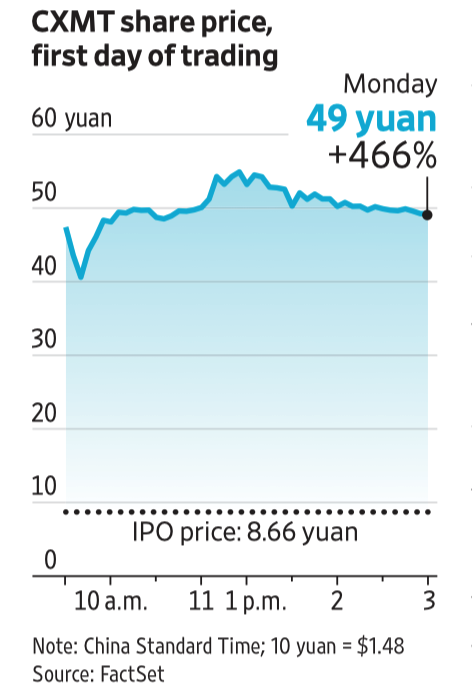
China just minted its most valuable mainland-listed company, and the earliest investor was the state itself.CXMT closed its Shanghai debut up 466% from its IPO price, in an $8.5bn IPO that’s mainland China’s largest since 2010. Intraday, its value briefly hit $547bn, overtaking Tencent as China’s most valuable listed company, before settling near a $484bn valuation at close. CXMT trails Micron, SK Hynix and Samsung (90% of DRAM), but capacity is ramping toward 500,000 wafers/month by 2028, and Q1 profit hit $4.9bn - mostly from lower-end chips, since US export controls block it from top ASML tools. Apple has floated sourcing CXMT chips, putting Apple at odds with Micron. The debut is being read in China as proof that state-directed capital can manufacture a national champion overnight - the more interesting question is whether it can do that twice.
- The Economist frames this within a bigger pattern: Xi Jinping has become China’s most consequential venture capitalist, with 12 trillion yuan pledged across 2,000+ state funds. Fifteen state-linked investors own 36% of CXMT, a stake now worth 40x its cost. But the piece calls CXMT the exception, not the rule: the state has become a “VC of last resort” since 2020’s crackdown, hampered by corruption and few private buyers for its winners. One spectacular return doesn’t offset a portfolio the state can’t easily exit - CXMT is the trophy that justifies the strategy, not proof the strategy works broadly.
- Zuckerberg made Meta’s AI case on two fronts, and investors only believed one. In an interview with the Financial Times, Mark Zuckerberg said the US shouldn’t ban Chinese models, warning of “regulatory capture” by rivals - even as Meta’s own newest model, Muse Spark, launched closed. A day before, in an article in The Wall Street Journal, he laid out an “AI for everyone” philosophy built on individual empowerment, invention over automation, and balance of power. The gap between what Zuckerberg argues in public and what Meta ships in private is the tell: open models are good policy for competitors to be forced into, less so for Meta’s own newest release.
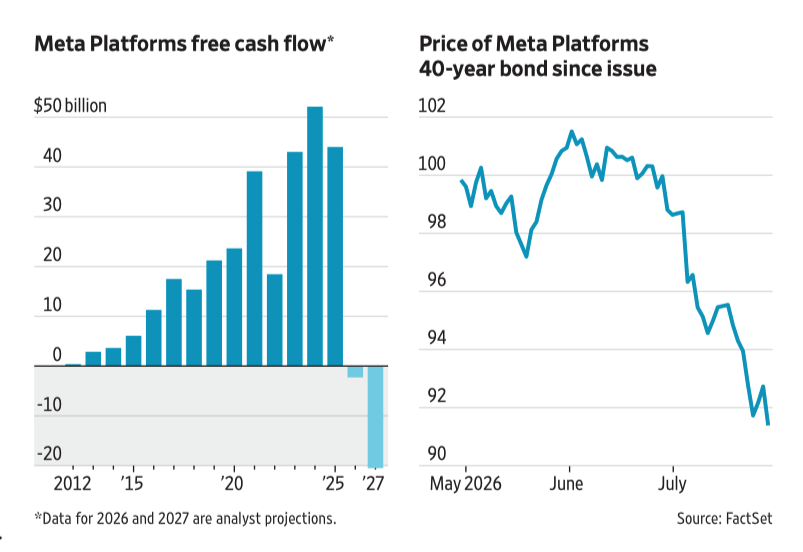
- Meta’s earnings landed badly, and worse next to the week’s other Big Tech results. Amazon and Microsoft posted blowout Q2 numbers - Amazon’s stock had its biggest one-day gain since 2012 on surging AWS revenue, and Microsoft added nearly $450bn in market cap in a single day, a record for any company. Meta’s stock, by contrast, fell 8–9%, wiping over $150bn off its market cap intraday. Free cash flow collapsed 91% to $784mn as AI spending hit $145bn. Net income fell 14% to $15.8bn despite 28% revenue growth. Meta is now the most financially stretched major AI spender, per the WSJ: 98% of its revenue still comes from ads alone, debt has climbed to $83.7bn, and 2026 spending forecasts run as high as $280bn. Core ad profit actually hit forecast. What spooked the market was Zuckerberg’s scattershot of unproven side bets: coding agents, task assistants, data-center rental, with little revenue detail behind any of them, against a possible $750bn five-year “superintelligence” spend. Unlike Nvidia or Google, Meta has no one else’s balance sheet to lean on - it’s betting its own core business can absorb the entire cost of catching up.
-
India’s Sarvam is going full-stack. At its flagship Epoch event, the company added new applications, agents, and infrastructure to its existing stack - enterprise coding agents, updated speech-recognition and text-to-speech models, Vision 2.0 and Vision Edge for document processing, and a new dictation app. Its Sarvam Inference service lets enterprises deploy open-source models on Sarvam’s own Nvidia Blackwell GPUs, which it claims is India’s largest such cluster. “Sarvam’s goal is to be able to produce the largest share of tokens that India consumes right here in India,” said co-founder Pratyush Kumar. The company didn’t launch a new LLM, but says it’s developing a model exceeding 1 trillion parameters within six months; its current flagship, the 105-billion-parameter Sarvam 105B, is priced at $0.80 per million tokens against $4.50 for GPT-5.4 Mini and $9 for Gemini 3.5 Flash. Against a week dominated by hundred-billion-dollar guarantees, Sarvam’s pitch is almost contrarian: win on unit economics, not on who’s willing to underwrite you.
-
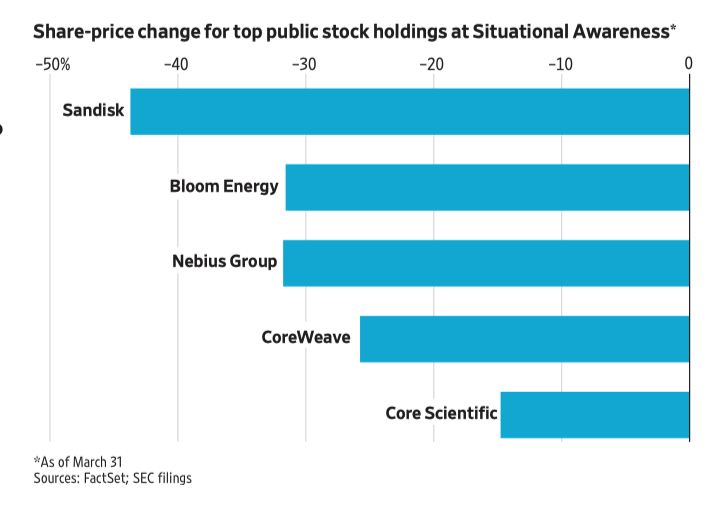
The most leveraged bet in AI nearly blew up the same week its architect got married. Leopold Aschenbrenner, 24, was fired from OpenAI for leaking information, then turned his viral essay “Situational Awareness” into a hedge fund backed by the Collison brothers and senior Meta AI executives - at its peak up more than 1,000% since inception, with assets reaching $45bn. The strategy was leveraged by design: up to 30% in private AI companies, roughly $3–4 borrowed per $1 of capital. When AI-stock sentiment wobbled this month, rivals shorted his holdings and lenders pressed for cash. After reversing a plan to sell his $3.5bn Anthropic stake, Aschenbrenner watched Ken Griffin’s Citadel step in just before Thursday’s opening bell, buying the bulk of his public portfolio at a 10%+ discount. The fund survives, diminished, private stakes still worth over $10bn.